Start with a character, not a shopping list
Think of an outfit as another way to explain your movement. A slow greeting might belong to a velvet-voiced host. A stop-start wrist flick might suit a very dramatic kitchen-floor headliner. Choose two descriptive words, such as “warm and theatrical” or “tidy and mischievous,” before choosing any garments. Those words give the look a direction without turning it into a purchasing task.
Disco-inspired does not mean historically exact. A contemporary outfit can borrow a broad collar, a warm metallic detail or a flowing silhouette without pretending to recreate a particular club or community. If historical accuracy matters to your project, look at dated photographs and museum collections rather than treating every shiny garment as interchangeable retro evidence.
Find the strongest thing you already own
Lay out a few comfortable items and choose one focal point. It might be a patterned shirt, a satin-like scarf worn securely away from moving equipment, or a pair of trousers whose shape you enjoy. Build around that piece with familiar basics. When every item competes for attention, the movement can disappear behind the outfit.
Kitchen-floor headliner
Try a soft shimmering top with comfortable trousers. Keep the sparkle near the greeting gesture so the outfit reinforces the phrase.
One-colour storyteller
Repeat plum, rust or cream in two places. Mix matte and softly reflective surfaces instead of adding more accessories.
These are editorial concepts, not products or dress requirements. Substitute any colours, shapes or fabrics that suit your preferences. There is no gender assignment attached to a collar, a wide leg or a metallic layer. Your character can be quiet, exuberant or somewhere between the two.
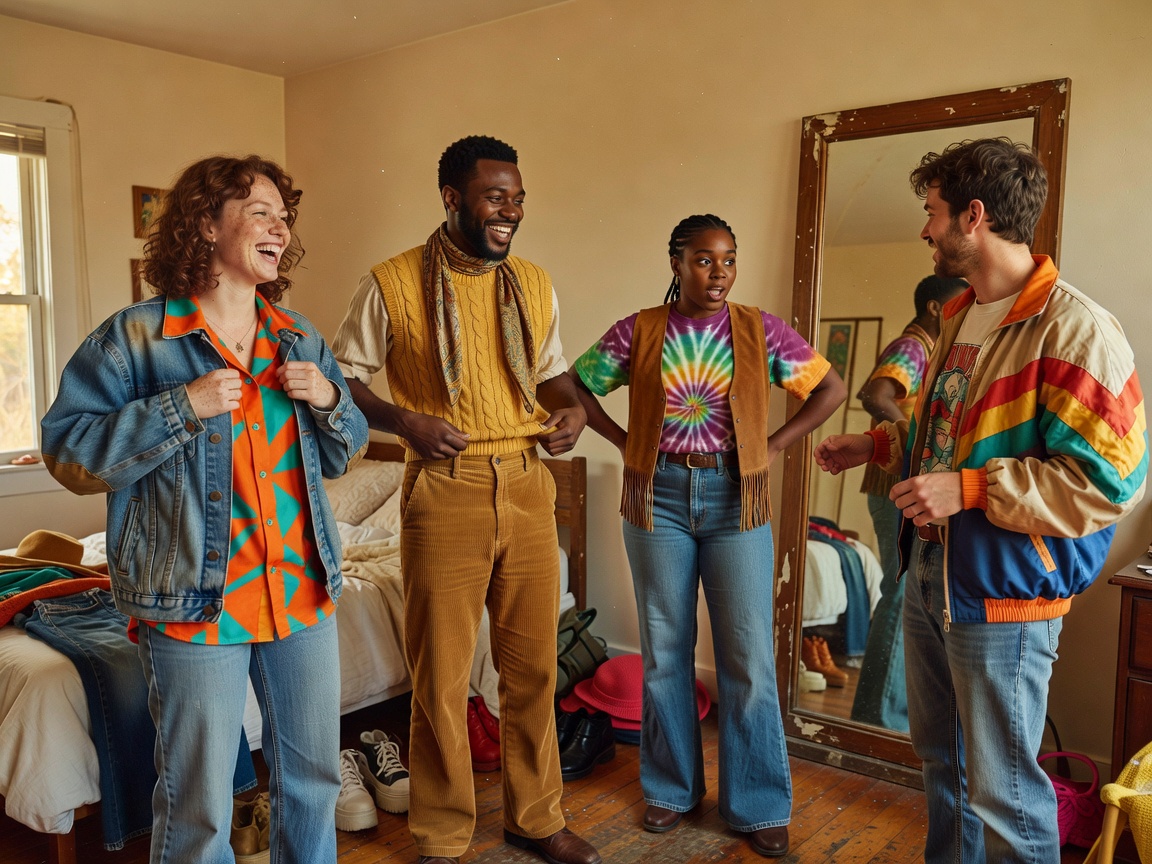
Do a movement check before the music
Try the actual actions you intend to use while wearing the outfit. Reach only within your comfortable range, turn if your routine includes turning and practise sitting if that is relevant. Notice pulling seams, slipping waistbands, restrictive sleeves and hems that catch. A garment can look perfect while standing still and become distracting during a simple repeated gesture.
Footwear should suit you and the surface, not an imagined costume standard. High platforms are not a requirement for a disco reference. Check that your shoes feel secure, the floor is clear and your chosen setup supports the movement you plan. Avoid assuming that socks, bare feet or a particular sole will be suitable on every surface.
Check accessories separately. Long necklaces can swing, loose scarves can catch and heavy earrings can become uncomfortable. Remove anything that interferes with your movement or equipment. If you use mobility aids, keep fabrics and decoration clear of wheels, controls and other moving parts. Practical access matters more than preserving an outfit’s silhouette.
Let sensory comfort shape the look
Sequins, synthetic fibres, stiff collars and fitted waistbands do not feel the same to everyone. Choose softer substitutes where useful: a printed sparkle motif instead of a scratchy surface, a loose overshirt instead of a tight jacket, or a colour contrast instead of jewellery. An outfit does not need texture overload to communicate confidence.
Temperature is part of comfort too. Build removable layers and keep a place to put them. If a group is gathering, describe the theme as an invitation rather than a uniform. Guests should be able to participate in ordinary clothing, seated, or without a visible costume element. Nobody owes the room a personal explanation for choosing comfort.
Borrow thoughtfully and credit specifically
Retro references come from real people and scenes. Disco’s history includes Black, Latino and LGBTQ+ communities; reducing that history to novelty accessories misses much of its significance. For context, explore the National Museum of African American History and Culture and dated material from the Victoria and Albert Museum. These are research starting points, not endorsements of this site.
If your outfit closely references a particular performer, designer or image, say so when you describe it. “Inspired by this specific photograph” is clearer than claiming an entire era. Avoid presenting cultural or religious dress as a generic party character. When you are unsure, simplify the concept and focus on colour, proportion or your own invented persona.
Finish by testing the whole story
Put your movement and outfit together once without filming. Does the sleeve help describe the gesture or hide it? Does the character feel playful to you, or does the costume create pressure? Change whatever distracts. The best result is not the most elaborate outfit; it is a version that supports your idea and lets you move comfortably.
When sharing an outfit photograph, ask everyone visible for permission and avoid including private details in the background. Mention practical substitutions alongside your inspiration. “A soft plum shirt gives the same effect” is a more welcoming note than an exact shopping list. Your look becomes useful to others when you explain the choice behind it.